


Prediabetes in Obesity: Early Warning Signs, Risk Factors, and Prevention Strategies
Prediabetes in Obesity: Early Warning Signs, Risk Factors, and Prevention Strategies
Introduction
The global increase in obesity has been accompanied by a sharp rise in prediabetes and type 2 diabetes, making early metabolic detection more important than ever. In many patients, diabetes does not begin suddenly. It develops gradually through a period of worsening insulin resistance, impaired glucose regulation, and metabolic dysfunction that may go unnoticed for years. This earlier stage is commonly referred to as prediabetes.
Prediabetes is clinically important because it represents a warning signal. Blood glucose is higher than normal but not yet in the diagnostic range for type 2 diabetes. At this stage, many patients already have important metabolic changes taking place beneath the surface, including insulin resistance, visceral adiposity, dyslipidemia, chronic low-grade inflammation, and early cardiometabolic risk accumulation. In patients with obesity, these risks are especially relevant because obesity is one of the strongest drivers of the metabolic abnormalities that lead to prediabetes and eventually type 2 diabetes.
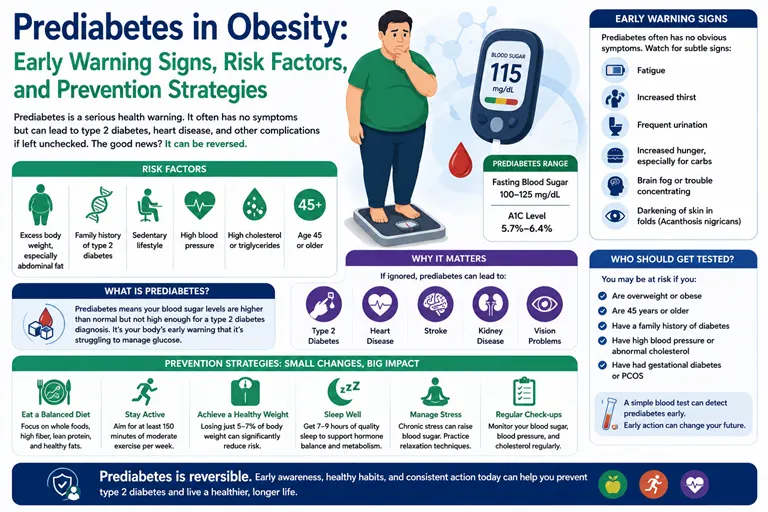
From a public health perspective, prediabetes is a critical window of opportunity. It is the stage at which clinicians, patients, and health systems still have a strong chance to intervene before overt diabetes develops. From a clinical endocrinology perspective, it is also the stage at which a more complete understanding of weight gain, central obesity, insulin resistance, family history, lifestyle patterns, and cardiometabolic risk can help shape more effective long-term prevention.
For patients, however, prediabetes is often confusing. Many people do not know they have it because symptoms may be absent or subtle. Others assume that because they do not yet have diabetes, the condition is not serious. In reality, prediabetes in the setting of obesity can be a major metabolic red flag. Without timely lifestyle intervention and appropriate clinical follow-up, the risk of progression to type 2 diabetes, metabolic syndrome, fatty liver disease, and cardiovascular complications may increase over time.
This article explores prediabetes in obesity, including what it means, why obesity raises the risk so strongly, the early warning signs clinicians and patients should know, the role of insulin resistance, major risk factors, and the practical prevention strategies that can reduce progression toward type 2 diabetes. It also explains why prediabetes remains a highly relevant topic for journals working at the intersection of obesity, endocrinology, and diabetes.
Table of Contents
- What is prediabetes?
- Why obesity increases the risk of prediabetes
- The role of insulin resistance in prediabetes
- Visceral fat, inflammation, and early metabolic dysfunction
- Early warning signs of prediabetes in people with obesity
- Major risk factors for progression from obesity to prediabetes
- Prediabetes, metabolic syndrome, and cardiometabolic risk
- How prediabetes is identified in clinical practice
- Prevention strategies for people with obesity and prediabetes risk
- Why early intervention matters in obesity-related prediabetes
- Why prediabetes in obesity is an important research topic
- Frequently asked questions
- Conclusion
1. What Is Prediabetes?
Prediabetes is a metabolic state in which blood glucose levels are higher than normal but not yet high enough to meet the diagnostic criteria for type 2 diabetes mellitus. It is not simply a borderline laboratory result to be ignored. Rather, it often reflects an ongoing process of impaired glucose regulation, worsening insulin resistance, and increasing metabolic stress.
Why prediabetes matters
Prediabetes is important because it signals that the body’s ability to regulate glucose is already under strain. In many cases, the pancreas is still producing insulin, sometimes in large amounts, but tissues such as muscle, liver, and adipose tissue are no longer responding efficiently. Over time, this can lead to progressively higher blood glucose levels and eventual diabetes if the underlying metabolic drivers are not addressed.
Prediabetes is not a harmless stage
Although prediabetes is an earlier stage than type 2 diabetes, it may still be associated with:
● insulin resistance
● abdominal obesity
● elevated triglycerides or low HDL cholesterol
● fatty liver disease
● hypertension
● chronic low-grade inflammation
● rising cardiometabolic risk
This is why prediabetes should be seen as an opportunity for early prevention and metabolic correction, especially in patients with obesity.
2. Why Obesity Increases the Risk of Prediabetes
Obesity is one of the strongest risk factors for the development of prediabetes. This is especially true when obesity involves central abdominal fat and visceral adiposity, both of which are closely linked with insulin resistance and metabolic dysfunction.
Why obesity affects glucose regulation
Excess adipose tissue, especially visceral fat, does more than increase body weight. It can alter:
● insulin sensitivity
● inflammatory signaling
● lipid metabolism
● hepatic glucose handling
● appetite regulation
● endocrine communication between tissues
These metabolic changes make it harder for the body to maintain normal glucose control over time.
Why the risk is not only about BMI
Body mass index can be useful, but the risk of prediabetes depends on more than weight alone. A person with obesity may be at especially high risk if they also have:
● abdominal obesity or increased waist circumference
● family history of diabetes
● sedentary lifestyle
● dyslipidemia
● hypertension
● sleep disruption or obstructive sleep apnea
● previous gestational diabetes or endocrine risk factors in relevant cases
Why this matters in clinical practice
When obesity is present, especially alongside other metabolic abnormalities, clinicians should think proactively about prediabetes risk rather than waiting for diabetes to become established.
3. The Role of Insulin Resistance in Prediabetes
If obesity is the visible part of the problem, insulin resistance is often one of the central metabolic mechanisms underneath it.
What is insulin resistance?
Insulin resistance occurs when the body’s tissues, particularly muscle, liver, and adipose tissue, do not respond effectively to insulin. In response, the pancreas may produce more insulin to maintain normal blood glucose levels. For a period of time, this compensation may keep glucose in a near-normal range. Eventually, however, the system begins to fail, and glucose levels start to rise.
Why insulin resistance is so important in prediabetes
Prediabetes often develops during the stage when:
● insulin levels may already be elevated
● glucose control is becoming unstable
● the liver may release glucose inappropriately
● muscle tissue may not take up glucose efficiently
● visceral fat and inflammation are contributing to metabolic strain
Why obesity makes insulin resistance worse
Excess adipose tissue, especially visceral fat, contributes to insulin resistance through:
● inflammatory mediators
● altered adipokine signaling
● free fatty acid overflow
● ectopic fat deposition in liver and muscle
● reduced metabolic flexibility
This is why prediabetes in obesity is rarely just about a sugar number. It is usually part of a larger process of insulin-resistant metabolic disease.
4. Visceral Fat, Inflammation, and Early Metabolic Dysfunction
Not all obesity carries the same metabolic risk. One of the most important determinants of prediabetes risk is the amount of visceral fat, which refers to fat stored deep within the abdominal cavity around internal organs.
Why visceral fat is metabolically dangerous
Visceral adiposity is associated with:
● insulin resistance
● increased free fatty acid release
● inflammatory cytokine activity
● altered glucose metabolism
● higher risk of fatty liver disease
● dyslipidemia and cardiometabolic burden
A patient with significant visceral fat may therefore be at risk of prediabetes even before obvious diabetes symptoms appear.
The inflammation connection
Obesity is increasingly recognized as a state of chronic low-grade inflammation. This inflammatory environment contributes to:
● impaired insulin action
● endothelial stress
● worsening lipid metabolism
● progressive metabolic syndrome features
● higher long-term risk of diabetes and cardiovascular disease
Why early dysfunction can be missed
Patients may feel relatively well during early metabolic decline. Blood sugar changes may be mild, and symptoms may be absent. Yet beneath the surface, visceral adiposity, insulin resistance, inflammation, and cardiometabolic risk may already be building.
5. Early Warning Signs of Prediabetes in People With Obesity
One of the challenges with prediabetes is that it may not cause dramatic symptoms. Many patients discover it only during routine testing or after developing additional metabolic problems. Still, there are several warning signs and clinical clues that should raise suspicion, especially in people with obesity.
Possible warning signs or clues include:
● increasing abdominal obesity or waist circumference
● persistent fatigue or low energy
● family history of type 2 diabetes
● elevated fasting glucose or borderline HbA1c on previous reports
● hypertension or worsening blood pressure
● high triglycerides or low HDL cholesterol
● history of gestational diabetes in relevant patients
● acanthosis nigricans in some individuals with significant insulin resistance
● difficulty losing weight despite repeated efforts
● fatty liver disease or abnormal metabolic profile on testing
Why symptoms are not always reliable
Many patients with prediabetes do not experience classic symptoms of diabetes. They may not have obvious polyuria, polydipsia, or marked weight loss. This is why risk-based screening and metabolic vigilance are so important in obesity care.
Why early recognition matters
By the time overt diabetes symptoms appear, metabolic damage may already be more advanced. Recognizing prediabetes risk earlier allows for more effective prevention.
6. Major Risk Factors for Progression From Obesity to Prediabetes
Not every person with obesity will develop prediabetes, but certain factors increase the likelihood substantially.
Important risk factors include:
● abdominal or visceral obesity
● family history of type 2 diabetes
● sedentary lifestyle
● high-calorie, highly processed dietary patterns
● poor sleep and sleep apnea
● advancing age in many populations
● history of gestational diabetes in relevant individuals
● hypertension
● dyslipidemia
● fatty liver disease
● polycystic ovary syndrome in relevant patients
● persistent insulin resistance or acanthosis nigricans
Why risk factors often cluster together
Prediabetes does not usually arise from a single cause. It often develops when multiple factors interact, such as:
● genetic predisposition
● central obesity
● low physical activity
● insulin resistance
● endocrine and metabolic stress
● poor cardiometabolic health
This is why prevention requires a broad view of the patient’s lifestyle, family history, body composition, metabolic profile, and cardiovascular risk factors.
7. Prediabetes, Metabolic Syndrome, and Cardiometabolic Risk
Prediabetes in obesity rarely exists in isolation. It is often part of a larger pattern of metabolic syndrome and cardiometabolic risk.
How metabolic syndrome fits in
Many patients with obesity and prediabetes also show features of metabolic syndrome, including:
● abdominal obesity
● elevated fasting glucose
● high triglycerides
● low HDL cholesterol
● hypertension
These abnormalities often reflect the same underlying problem: insulin-resistant metabolic dysfunction.
Why cardiometabolic risk matters at the prediabetes stage
Even before diabetes develops, patients with obesity and prediabetes may already be at increased risk for:
● progression to type 2 diabetes
● fatty liver disease
● vascular dysfunction
● worsening hypertension
● long-term cardiovascular disease
Why clinicians should not wait for diabetes
If prediabetes is viewed as “not yet serious,” an important prevention window may be lost. Cardiometabolic risk often begins accumulating well before full diabetes is diagnosed.
8. How Prediabetes Is Identified in Clinical Practice
Because prediabetes may be asymptomatic, laboratory screening and risk-based assessment play an important role in diagnosis.
Clinical evaluation may include:
● fasting blood glucose
● HbA1c
● broader metabolic assessment based on risk profile
● blood pressure and waist circumference review
● lipid profile
● family history and lifestyle assessment
● evaluation of obesity severity and metabolic complications
Why context matters
A single glucose value should not be interpreted in isolation. Clinicians often need to consider:
● body weight and central adiposity
● prior glucose trends
● family history of diabetes
● sleep, diet, and physical activity patterns
● presence of fatty liver disease, dyslipidemia, or hypertension
● symptoms suggesting broader metabolic dysfunction
Why follow-up is essential
Prediabetes is not a static label. Some patients improve with intervention, while others progress toward type 2 diabetes. This is why ongoing monitoring and preventive counseling are so important.
9. Prevention Strategies for People With Obesity and Prediabetes Risk
The most important message about prediabetes is that it is often a preventable turning point. In many patients, especially those with obesity, progression toward type 2 diabetes can be delayed or reduced through timely intervention.
Core prevention strategies include:
1. Weight management and reduction of visceral adiposity
Even moderate and sustained weight reduction may improve:
● insulin sensitivity
● fasting glucose
● cardiometabolic risk factors
● fatty liver burden
● blood pressure and lipid profile
2. Regular physical activity
Physical activity helps improve:
● insulin action
● glucose uptake in muscle
● metabolic flexibility
● weight maintenance
● cardiovascular health
3. Nutrition improvement
A sustainable dietary pattern can support:
● reduced caloric excess
● improved glycemic stability
● better weight management
● lower cardiometabolic burden
4. Sleep and stress management
Poor sleep and chronic stress can worsen insulin resistance, appetite regulation, and weight control, so these factors should not be ignored.
5. Regular monitoring and follow-up
Patients with obesity and prediabetes risk benefit from:
● periodic glucose assessment
● blood pressure and lipid review
● lifestyle reinforcement
● early identification of worsening metabolic status
Why prevention must be realistic
Patients are more likely to succeed when prevention plans are practical, personalized, and long-term rather than based on short bursts of unsustainable restriction.
10. Why Early Intervention Matters in Obesity-Related Prediabetes
Prediabetes is the stage at which the trajectory toward type 2 diabetes may still be altered most effectively. Once diabetes becomes established, the patient may face a greater burden of medication, complications, and long-term disease management.
Benefits of early intervention include:
● lower risk of progression to type 2 diabetes
● improvement in insulin resistance and metabolic syndrome features
● reduced cardiometabolic burden
● better long-term weight-management outcomes
● earlier control of hypertension, dyslipidemia, and fatty liver disease
● stronger patient understanding of long-term health risk
Why timing matters
The longer insulin resistance and metabolic dysfunction continue unchecked, the more difficult reversal may become. This is why obesity-related prediabetes should be treated as an opportunity for active prevention, not passive observation.
11. Why Prediabetes in Obesity Is an Important Research Topic
Prediabetes sits at the center of some of the most important questions in obesity, endocrinology, and diabetes prevention.
Key research questions include:
● Which patients with obesity are most likely to progress from prediabetes to diabetes?
● How should visceral adiposity and insulin resistance be assessed in risk prediction?
● What lifestyle strategies are most effective in real-world obesity-related prediabetes?
● How do sleep, fatty liver disease, and cardiometabolic burden influence progression?
● Which obesity-focused therapies best reduce diabetes risk in high-risk patients?
Why journals should publish on this topic
A specialty journal like Advances in Obesity, Endocrinology, and Diabetes (AOEDS) is well positioned to publish:
● review articles on prediabetes and obesity
● original studies on insulin resistance and metabolic syndrome
● prevention-focused endocrine and obesity research
● cardiometabolic risk assessments in high-risk populations
● clinical discussions on obesity-related diabetes prevention
Because prediabetes is the bridge between obesity and overt diabetes, it is one of the most strategically important subjects for AOEDS.
12. Frequently Asked Questions
1. What is prediabetes?
Prediabetes is a condition in which blood glucose is higher than normal but not yet high enough for a diagnosis of type 2 diabetes. It often reflects underlying insulin resistance and early metabolic dysfunction.
2. Why does obesity increase the risk of prediabetes?
Obesity, especially abdominal and visceral obesity, increases insulin resistance, inflammation, and metabolic stress, making it harder for the body to maintain normal glucose control.
3. Does prediabetes always cause symptoms?
No. Many people with prediabetes have no obvious symptoms and are identified only through laboratory testing or metabolic screening.
4. Can prediabetes be reversed or prevented from progressing?
In many patients, yes. Weight reduction, physical activity, better nutrition, sleep improvement, and regular clinical follow-up can reduce the risk of progression to type 2 diabetes.
5. Is prediabetes serious if I do not yet have diabetes?
Yes, because prediabetes often reflects insulin resistance, metabolic syndrome, and rising cardiometabolic risk. It should be taken seriously as an early warning stage.
6. Why is prediabetes relevant to AOEDS?
Because prediabetes sits at the intersection of obesity, insulin resistance, diabetes prevention, metabolic syndrome, and endocrinology, making it highly relevant to the journal’s scope.
13. Conclusion
Prediabetes in obesity is one of the most important early warning stages in modern metabolic medicine. It reflects a state in which the body’s glucose regulation is already under strain, often because of insulin resistance, visceral adiposity, chronic low-grade inflammation, and broader cardiometabolic dysfunction. Although patients may not yet meet the criteria for type 2 diabetes, the underlying metabolic burden can already be substantial, particularly when obesity is accompanied by hypertension, dyslipidemia, fatty liver disease, sedentary behavior, and family history of diabetes.
Understanding prediabetes matters because it creates a valuable opportunity for prevention. Instead of waiting for diabetes to become established, clinicians and patients can intervene earlier through weight management, physical activity, nutritional improvement, metabolic monitoring, and broader cardiometabolic risk reduction. This is especially important in obesity care, where prediabetes is often part of a larger syndrome involving insulin resistance, metabolic syndrome, and rising long-term cardiovascular risk.
For researchers, obesity-related prediabetes remains a critical area of study because it sits at the crossroads of diabetes prevention, obesity medicine, endocrinology, and cardiometabolic disease. For specialty journals such as AOEDS, it is a highly relevant topic that connects obesity with diabetes risk in a practical, clinically meaningful way. Publishing clear, evidence-informed work on prediabetes helps strengthen both early prevention strategies and the broader conversation around metabolic health.
Publish Obesity, Prediabetes, and Endocrine Research with AOEDS
https://aoeds.com/submit-paper
If your work focuses on prediabetes, obesity, insulin resistance, metabolic syndrome, diabetes prevention, cardiometabolic risk, endocrinology, or obesity-related metabolic disease, consider submitting your manuscript to Advances in Obesity, Endocrinology, and Diabetes (AOEDS). Specialty journals play an important role in connecting early metabolic research with the clinicians, scholars, and institutions working to prevent the future burden of type 2 diabetes.