


Metabolic Syndrome Explained: Why Obesity, High Blood Pressure, High Blood Sugar, and Dyslipidemia Often Occur Together
Metabolic Syndrome Explained: Why Obesity, High Blood Pressure, High Blood Sugar, and Dyslipidemia Often Occur Together
Introduction
In everyday clinical practice, it is common to see the same patient present with obesity, high blood pressure, elevated blood sugar, abnormal cholesterol or triglycerides, fatty liver disease, and rising cardiovascular risk. These conditions often do not occur by chance. They frequently represent different manifestations of a broader metabolic disturbance known as metabolic syndrome.
Metabolic syndrome is not a single disease in the way that pneumonia or hypothyroidism may be described as individual diagnoses. Instead, it is a cluster of interconnected cardiometabolic abnormalities that tend to occur together and increase the risk of type 2 diabetes, cardiovascular disease, stroke, fatty liver disease, chronic kidney disease, and long-term metabolic dysfunction. The syndrome is particularly important in patients with obesity, especially central or visceral obesity, because excess adipose tissue can drive insulin resistance, inflammation, dyslipidemia, endothelial dysfunction, and blood pressure abnormalities.
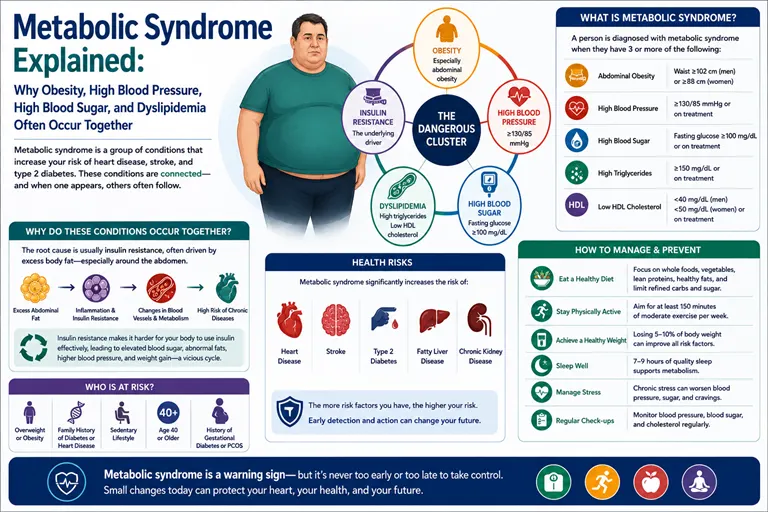
For clinicians, metabolic syndrome is valuable as a framework because it helps explain why several apparently separate problems often travel together. A patient with abdominal obesity may also have rising fasting glucose, high triglycerides, low HDL cholesterol, and borderline hypertension, even before type 2 diabetes or overt cardiovascular disease is formally diagnosed. If this cluster is recognized early, it provides an opportunity for preventive action, metabolic risk reduction, and more integrated treatment planning.
For patients, however, the term metabolic syndrome can be confusing. Many people understand diabetes or hypertension as individual diseases, but they do not realize that these problems may be linked through a common underlying process involving insulin resistance, visceral fat accumulation, chronic low-grade inflammation, and cardiometabolic stress. Understanding that link is important because it shifts the conversation away from treating isolated lab numbers and toward treating the whole metabolic environment.
This article explains what metabolic syndrome is, why obesity, high blood pressure, high blood sugar, and dyslipidemia so often occur together, how insulin resistance and visceral fat contribute to this process, and why metabolic syndrome matters so much in modern obesity, endocrinology, and diabetes care.
Table of Contents
- What is metabolic syndrome?
- Why obesity is central to metabolic syndrome
- The role of visceral fat and abdominal obesity
- Insulin resistance as the metabolic engine behind the syndrome
- Why high blood sugar develops in metabolic syndrome
- Why hypertension is so common in metabolic syndrome
- Dyslipidemia in metabolic syndrome: why triglycerides rise and HDL falls
- Metabolic syndrome, chronic inflammation, and cardiometabolic risk
- Metabolic syndrome, prediabetes, and diabesity
- How metabolic syndrome is identified in clinical practice
- Why metabolic syndrome changes treatment strategy
- Why metabolic syndrome is an important research and journal topic
- Frequently asked questions
- Conclusion
1. What Is Metabolic Syndrome?
Metabolic syndrome refers to a cluster of metabolic and cardiovascular risk factors that tend to occur together in the same patient. While definitions may vary slightly depending on the clinical framework being used, the syndrome generally involves a combination of:
● abdominal or central obesity
● elevated blood glucose or impaired glucose regulation
● hypertension
● high triglycerides
● low HDL cholesterol
Why the syndrome matters
The importance of metabolic syndrome lies not in the label alone, but in what it predicts. Patients with this cluster are often at increased risk of:
● type 2 diabetes
● cardiovascular disease
● stroke
● fatty liver disease
● chronic kidney disease
● progressive cardiometabolic dysfunction
Why it is not just a collection of random problems
These abnormalities are linked by overlapping metabolic mechanisms, particularly:
● insulin resistance
● visceral adiposity
● chronic low-grade inflammation
● altered lipid handling
● vascular dysfunction
● neurohormonal and endocrine changes
This is why metabolic syndrome is best understood as a pattern of metabolic disease, not a set of unrelated lab abnormalities.
2. Why Obesity Is Central to Metabolic Syndrome
Although metabolic syndrome can be discussed in terms of blood sugar, blood pressure, and cholesterol abnormalities, obesity, especially central obesity, is often one of its most visible and biologically important drivers.
Why obesity matters so much
Excess adipose tissue is not just stored energy. It is metabolically active and influences:
● insulin sensitivity
● inflammatory pathways
● lipid metabolism
● endocrine signaling
● vascular function
● appetite regulation and energy balance
When obesity develops, especially around the abdomen, it can create the conditions in which multiple metabolic abnormalities begin to appear together.
Why central obesity is especially important
A patient with generalized weight gain may or may not have severe metabolic dysfunction, but central abdominal obesity is much more strongly linked to:
● insulin resistance
● high triglycerides
● low HDL cholesterol
● elevated fasting glucose
● fatty liver disease
● hypertension
● increased cardiovascular risk
This is why waist circumference and abdominal adiposity are so important in metabolic risk assessment.
3. The Role of Visceral Fat and Abdominal Obesity
One of the most important concepts in metabolic syndrome is visceral fat. Visceral fat is the fat stored deep inside the abdominal cavity around internal organs. It behaves differently from subcutaneous fat and is strongly associated with metabolic dysfunction.
Why visceral fat is metabolically harmful
Visceral adiposity contributes to:
● insulin resistance
● free fatty acid overflow into the circulation
● inflammatory cytokine activity
● abnormal glucose handling
● fatty liver disease
● dyslipidemia
● endothelial and vascular stress
Why abdominal obesity is a red flag
Patients with large waist circumference or clear central obesity often carry a higher risk of:
● prediabetes and type 2 diabetes
● hypertension
● high triglycerides
● low HDL cholesterol
● fatty liver disease
● long-term cardiovascular disease
Why this matters clinically
Not every patient with a higher body weight has the same risk profile. Fat distribution matters. A patient with substantial visceral adiposity may have much greater cardiometabolic risk than another patient with the same BMI but less abdominal fat.
4. Insulin Resistance as the Metabolic Engine Behind the Syndrome
If visceral obesity is one of the visible markers of metabolic syndrome, insulin resistance is one of the most important underlying mechanisms.
What is insulin resistance?
Insulin resistance occurs when tissues such as muscle, liver, and adipose tissue no longer respond effectively to insulin. To compensate, the body produces more insulin in an attempt to keep blood glucose under control. This compensation may work for a while, but over time glucose regulation becomes unstable.
Why insulin resistance drives metabolic syndrome
Insulin resistance is associated with:
● rising fasting glucose
● compensatory hyperinsulinemia in early stages
● worsening triglyceride metabolism
● fatty liver development
● elevated blood pressure in many patients
● increasing cardiometabolic burden
Why obesity worsens insulin resistance
Obesity, especially visceral obesity, contributes to insulin resistance through:
● inflammatory signaling
● altered adipokine balance
● excess free fatty acid release
● ectopic fat accumulation in liver and muscle
● impaired metabolic flexibility
This is why insulin resistance is often described as the metabolic engine of the syndrome.
5. Why High Blood Sugar Develops in Metabolic Syndrome
One of the hallmark features of metabolic syndrome is elevated blood glucose or early impairment in glucose regulation. This may appear as:
● fasting glucose that is higher than normal
● prediabetes
● eventually type 2 diabetes if the metabolic burden progresses
Why glucose starts rising
When insulin resistance becomes significant, the body has to work harder to maintain normal glucose levels. Over time:
● muscle may not take up glucose efficiently
● the liver may release glucose inappropriately
● the pancreas may need to produce increasing amounts of insulin
● pancreatic compensation may begin to fail
Why this matters before diabetes is diagnosed
A patient may already have important metabolic dysfunction at the prediabetes stage, even before overt diabetes develops. This is why elevated fasting glucose in metabolic syndrome should be seen as an early warning sign rather than a minor lab fluctuation.
Why obesity increases this risk
Abdominal obesity and visceral fat amplify insulin resistance and make the progression from normal glucose tolerance to prediabetes and diabetes more likely.
6. Why Hypertension Is So Common in Metabolic Syndrome
High blood pressure is another common component of metabolic syndrome, and its presence significantly increases long-term cardiovascular risk.
Why obesity and insulin resistance affect blood pressure
Several mechanisms may contribute to hypertension in metabolic syndrome, including:
● insulin resistance and hyperinsulinemia
● altered renal sodium handling
● sympathetic nervous system activation
● vascular stiffness and endothelial dysfunction
● inflammatory and hormonal changes associated with obesity
● sleep apnea and related physiologic stress in some patients
Why this matters
When hypertension occurs alongside obesity, high blood sugar, and dyslipidemia, the patient’s risk of:
● coronary artery disease
● stroke
● kidney disease
● heart failure
● long-term vascular complications
rises significantly.
Why blood pressure cannot be treated as an isolated issue
In metabolic syndrome, hypertension is often part of a larger pattern of metabolic dysfunction rather than a completely separate problem.
7. Dyslipidemia in Metabolic Syndrome: Why Triglycerides Rise and HDL Falls
Abnormal lipid metabolism is another defining feature of metabolic syndrome. The typical pattern often includes:
● elevated triglycerides
● low HDL cholesterol
● broader atherogenic lipid abnormalities in some patients
Why this happens
Insulin resistance and obesity can alter the way the body handles lipids, leading to:
● increased triglyceride production
● impaired lipid clearance
● fatty liver-related metabolic disruption
● changes in HDL metabolism
Why dyslipidemia matters
This lipid pattern is clinically important because it contributes to:
● atherosclerotic cardiovascular disease
● endothelial dysfunction
● worsening cardiometabolic risk
● progression of fatty liver and metabolic disease
Why clinicians should pay attention early
A patient with abdominal obesity, borderline glucose elevation, and high triglycerides may already be well into the metabolic syndrome pathway even if formal diabetes has not yet developed.
8. Metabolic Syndrome, Chronic Inflammation, and Cardiometabolic Risk
Metabolic syndrome is not only about glucose, blood pressure, and lipids. It is also associated with chronic low-grade inflammation, which helps drive the long-term cardiometabolic consequences of the syndrome.
Why inflammation matters
As adipose tissue expands, especially visceral fat, it can produce inflammatory mediators and alter endocrine signaling. This contributes to:
● worsening insulin resistance
● endothelial dysfunction
● vascular injury over time
● progression of atherosclerosis
● fatty liver disease and broader organ stress
Why cardiometabolic risk rises
When obesity, insulin resistance, hypertension, dyslipidemia, and inflammation occur together, the patient’s risk of:
● type 2 diabetes
● cardiovascular disease
● stroke
● kidney disease
● long-term metabolic decline
becomes significantly higher than with any one factor alone.
Why this matters for prevention
Metabolic syndrome should be recognized early because cardiometabolic damage often begins before the patient experiences a major event such as diabetes diagnosis, heart attack, or stroke.
9. Metabolic Syndrome, Prediabetes, and Diabesity
Metabolic syndrome is closely connected with both prediabetes and diabesity.
Prediabetes connection
Many patients with metabolic syndrome already have:
● elevated fasting glucose
● impaired glucose tolerance
● significant insulin resistance
● increasing risk of progression to type 2 diabetes
This makes metabolic syndrome one of the most important early warning frameworks in diabetes prevention.
Diabesity connection
Diabesity refers to the overlap between obesity and type 2 diabetes. Metabolic syndrome often sits right in the middle of that overlap because it includes:
● abdominal obesity
● insulin resistance
● high blood sugar
● dyslipidemia
● hypertension
In other words, metabolic syndrome helps explain why obesity so often progresses toward prediabetes, type 2 diabetes, and cardiometabolic disease.
10. How Metabolic Syndrome Is Identified in Clinical Practice
Metabolic syndrome is usually identified through a combination of clinical examination, anthropometric measures, and laboratory assessment.
Evaluation may include:
● waist circumference or evidence of central obesity
● fasting blood glucose or HbA1c
● blood pressure measurement
● triglycerides and HDL cholesterol
● overall obesity assessment and metabolic history
● family history of diabetes or cardiovascular disease
● evaluation of fatty liver disease, sleep apnea, or other associated conditions where relevant
Why context matters
A patient’s metabolic risk should not be judged by one number alone. A borderline fasting glucose may carry much more significance if the patient also has:
● abdominal obesity
● high triglycerides
● low HDL
● hypertension
● family history of diabetes
● sedentary lifestyle or fatty liver disease
Why longitudinal follow-up matters
Metabolic syndrome is not a static diagnosis. Some patients improve substantially with lifestyle intervention and risk-factor management, while others progress toward diabetes and cardiovascular disease if underlying drivers are not addressed.
11. Why Metabolic Syndrome Changes Treatment Strategy
Recognizing metabolic syndrome changes the way clinicians approach care because it highlights the need to treat the whole metabolic pattern, not just isolated symptoms.
Why isolated treatment is not enough
If a patient is treated only for blood pressure but continues to have:
● abdominal obesity
● insulin resistance
● prediabetes
● high triglycerides
● fatty liver disease
● poor lifestyle patterns
then the broader cardiometabolic disease process may continue.
A metabolic syndrome treatment strategy may include:
● weight reduction and visceral fat management
● physical activity and exercise support
● nutrition counseling focused on long-term sustainability
● blood pressure control
● glucose monitoring and diabetes prevention
● lipid management
● sleep and stress assessment
● evaluation of fatty liver and broader cardiometabolic risk
Why this is so important
Metabolic syndrome reminds clinicians that obesity, glucose control, blood pressure, and lipid abnormalities are often connected, and treatment should reflect that connection.
12. Why Metabolic Syndrome Is an Important Research and Journal Topic
Metabolic syndrome remains one of the most important concepts in obesity, endocrinology, and diabetes research because it connects multiple high-priority disease processes into a single cardiometabolic framework.
Key research questions include:
● How can metabolic syndrome be identified earlier in high-risk populations?
● Which components of the syndrome are most predictive of progression to diabetes or cardiovascular disease?
● How should visceral adiposity be incorporated into risk assessment?
● Which lifestyle and pharmacologic strategies best reduce cardiometabolic burden?
● How do prediabetes, fatty liver disease, thyroid dysfunction, and obesity therapies interact with metabolic syndrome risk?
Why AOEDS is well positioned for this topic
A journal like Advances in Obesity, Endocrinology, and Diabetes (AOEDS) can publish:
● review articles on metabolic syndrome mechanisms
● original studies on obesity, insulin resistance, and dyslipidemia
● prediabetes and diabesity research
● cardiometabolic risk reduction studies
● endocrine perspectives on obesity-related metabolic disease
Because metabolic syndrome ties together obesity, diabetes risk, cardiovascular health, and endocrine dysfunction, it is one of the most strategic umbrella topics for AOEDS.
13. Frequently Asked Questions
1. What is metabolic syndrome?
Metabolic syndrome is a cluster of interconnected metabolic risk factors, typically including abdominal obesity, elevated blood glucose, high blood pressure, high triglycerides, and low HDL cholesterol.
2. Is metabolic syndrome the same as diabetes?
No. Metabolic syndrome is not the same as diabetes, but it often increases the risk of prediabetes and type 2 diabetes because of underlying insulin resistance and metabolic dysfunction.
3. Why do obesity, high blood pressure, and high blood sugar often occur together?
These conditions often share common underlying mechanisms such as visceral obesity, insulin resistance, chronic inflammation, and cardiometabolic stress.
4. Why is abdominal obesity more important than weight alone?
Abdominal and visceral obesity are more strongly linked with insulin resistance, dyslipidemia, fatty liver disease, and cardiovascular risk than body weight alone.
5. Can metabolic syndrome be improved?
Yes. In many patients, metabolic syndrome can improve with weight reduction, physical activity, dietary improvement, better sleep, blood pressure and lipid management, and early intervention for prediabetes or diabetes risk.
6. Why is metabolic syndrome relevant to AOEDS?
Because it sits directly at the intersection of obesity, endocrinology, diabetes, prediabetes, cardiometabolic risk, and metabolic disease prevention, making it a highly relevant subject for the journal.
14. Conclusion
Metabolic syndrome is one of the most useful frameworks for understanding why obesity, high blood pressure, elevated blood sugar, and dyslipidemia so often occur together. These problems are not merely parallel conditions happening by coincidence. They are often different expressions of a deeper metabolic disturbance driven by visceral adiposity, insulin resistance, chronic inflammation, altered lipid handling, and broader cardiometabolic dysfunction.
Recognizing metabolic syndrome matters because it allows clinicians to intervene earlier, before the patient progresses to type 2 diabetes, advanced cardiovascular disease, fatty liver disease, or more severe metabolic decline. It also shifts the focus from treating isolated laboratory abnormalities to treating the whole metabolic environment, including abdominal obesity, glucose regulation, blood pressure, lipid profile, and long-term cardiovascular risk.
For patients, understanding metabolic syndrome can be empowering because it explains why lifestyle change, weight management, physical activity, and regular metabolic monitoring matter even before overt diabetes develops. For clinicians, it reinforces the need for integrated care rather than fragmented management of single risk factors. For researchers, it remains a central theme in obesity medicine, endocrinology, diabetes prevention, and cardiometabolic science. And for journals like AOEDS, metabolic syndrome is one of the strongest umbrella topics because it naturally connects obesity, prediabetes, diabetes, cardiometabolic risk, and endocrine dysfunction into a unified and clinically meaningful field of study.
Publish Obesity, Metabolic Syndrome, and Endocrine Research with AOEDS
https://aoeds.com/submit-paper
If your work focuses on metabolic syndrome, obesity, insulin resistance, prediabetes, dyslipidemia, cardiometabolic risk, endocrinology, or diabetes-related metabolic disease, consider submitting your manuscript to Advances in Obesity, Endocrinology, and Diabetes (AOEDS). Specialty journals play an important role in bringing clinically relevant metabolic research to endocrinologists, diabetologists, obesity specialists, and scholars working to reduce the long-term burden of chronic metabolic disease.