
How to Write and Publish a Diabetes or Endocrinology Research Paper: A Practical Guide for Researchers and Clinicians
How to Write and Publish a Diabetes or Endocrinology Research Paper: A Practical Guide for Researchers and Clinicians
Introduction
Publishing a research paper in the fields of diabetes, obesity, and endocrinology is an important milestone for clinicians, academicians, postgraduate students, and biomedical researchers. A well-written article not only contributes to scientific knowledge but also helps improve patient care, supports evidence-based practice, and enhances the academic profile of the author. However, many researchers struggle with the process of converting clinical observations, datasets, laboratory findings, or review concepts into a well-structured manuscript that meets the expectations of a peer-reviewed journal.
In medical specialties such as endocrinology and diabetology, the challenge is even greater because manuscripts often involve complex clinical outcomes, biochemical parameters, long-term follow-up data, drug response patterns, imaging findings, or multi-factor metabolic relationships. A good idea alone is not enough. The research paper must be clinically relevant, methodologically sound, ethically compliant, clearly written, and aligned with the scope and formatting requirements of the target journal.
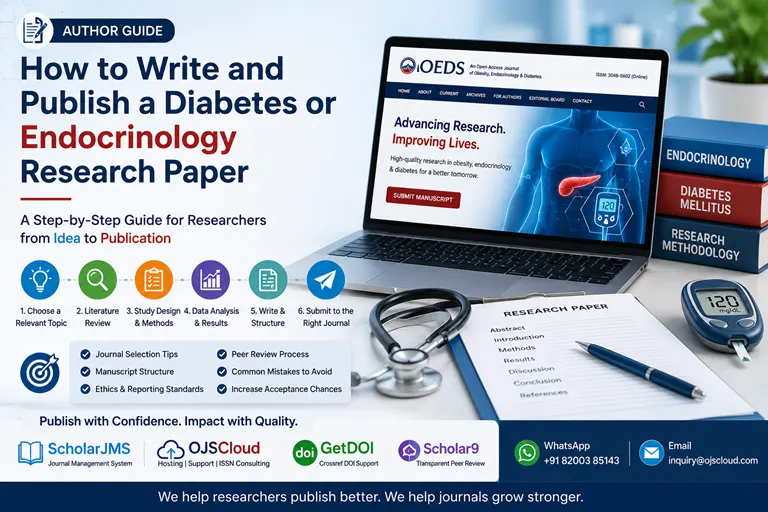
This guide explains how to write and publish a diabetes or endocrinology research paper, from choosing a topic to responding to peer review comments. Whether you are preparing an original article on glycemic control, a review on obesity therapeutics, a case report on thyroid dysfunction, or a study on diabetic complications, the principles in this article will help you move from research concept to successful publication.
Table of Contents
- Why publishing in diabetes and endocrinology matters
- Choosing the right research topic
- Understanding the common article types in medical journals
- How to structure a diabetes or endocrinology research paper
- Writing an effective title, abstract, and keywords
- Presenting methods, results, and discussion clearly
- Ethical approval, patient consent, and reporting standards
- Choosing the right journal for submission
- Preparing your manuscript for journal submission
- What happens during peer review
- Common reasons diabetes and endocrinology papers get rejected
- Why DOI, metadata, and article presentation matter after acceptance
- Final checklist before submission
- Frequently asked questions
- Conclusion
1. Why Publishing in Diabetes and Endocrinology Matters
Diabetes, obesity, thyroid disorders, adrenal disorders, pituitary disease, metabolic syndrome, osteoporosis, and reproductive endocrinology are all areas with major public health importance. Research in these fields directly influences screening strategies, treatment protocols, drug development, lifestyle interventions, and health policy decisions.
For example, a paper on insulin resistance markers in obesity may help clinicians identify patients at higher cardiometabolic risk. A review on GLP-1 receptor agonists can guide therapeutic decisions. A case report on rare endocrine manifestations may improve diagnostic awareness. A study on diabetic foot outcomes can contribute to better preventive care in high-risk populations.
Publishing in this field therefore serves multiple purposes:
● It shares clinical and scientific findings with the wider medical community
● It supports evidence-based practice and academic dialogue
● It strengthens the author’s academic credibility and research portfolio
● It helps institutions and departments demonstrate scholarly output
● It contributes to better patient care by improving knowledge dissemination
For early-career researchers, publication is also essential for career growth, promotions, fellowship applications, thesis completion, and professional recognition.
2. Choosing the Right Research Topic
A strong paper starts with a strong research question. In diabetes and endocrinology, a publishable topic should be relevant, focused, evidence-based, and clinically or scientifically meaningful.
Good sources for research ideas
Research ideas often emerge from:
● recurring clinical problems seen in practice
● unanswered questions in existing literature
● unusual or educational patient cases
● treatment response patterns
● gaps in local or regional epidemiological data
● thesis or dissertation projects
● retrospective hospital record analysis
● laboratory, metabolic, or biomarker-based studies
● narrative or systematic literature synthesis
Examples of relevant topics in AOEDS scope
A diabetes or endocrinology journal may consider topics such as:
● obesity and insulin resistance
● diabetic neuropathy, nephropathy, retinopathy, or diabetic foot
● thyroid disorders and metabolic health
● obesity pharmacotherapy including semaglutide or tirzepatide
● gestational diabetes
● endocrine complications of obesity
● metabolic syndrome and cardiovascular risk
● vitamin D, bone metabolism, and endocrine interactions
● endocrine case reports and rare presentations
● lifestyle interventions in diabetes management
What makes a topic strong?
A good research topic should answer these questions:
● Is the question clinically or scientifically important?
● Is there enough data or literature to support the work?
● Is the study feasible within available time and resources?
● Does it add something new, even if modestly?
● Does it fit the target journal’s aims and scope?
A common mistake is choosing a topic that is too broad. For instance, “Diabetes in adults” is too vague. A stronger topic would be:
“Association between body mass index and glycemic control among adults with type 2 diabetes attending a tertiary care center.”
The more specific the question, the easier it becomes to design the study and write the paper.
3. Understanding the Common Article Types in Medical Journals
Before writing, decide what type of manuscript you are preparing. The structure and expectations vary by article type.
Original Research Article
This is suitable when you have primary data from a clinical, observational, laboratory, cross-sectional, retrospective, or interventional study.
Examples:
● Prevalence of thyroid dysfunction among patients with obesity
● Glycemic outcomes after initiation of a specific antidiabetic therapy
● Association of HbA1c with diabetic foot severity
Review Article
A review summarizes and analyzes published evidence on a topic. It may be narrative, systematic, or scoping in nature.
Examples:
● GLP-1 receptor agonists in obesity management
● Recent advances in diabetic nephropathy biomarkers
Case Report
Case reports are useful for rare, educational, or unusual clinical scenarios.
Examples:
● Unusual endocrine presentation of autoimmune thyroid disease
● Rare metabolic complication in a diabetic patient
Short Communication / Brief Report
This is suitable for concise but meaningful findings that may not require a full-length article.
Editorial or Commentary
These are generally invited, but some journals may consider expert opinion pieces on current topics in obesity, diabetes, and endocrine care.
Choosing the correct article type early helps you align the manuscript with journal expectations.
4. How to Structure a Diabetes or Endocrinology Research Paper
Most medical journals follow the IMRAD format:
● Introduction
● Methods
● Results
● Discussion
However, the paper also includes other important sections such as title page, abstract, keywords, references, declarations, and figure/table legends.
A standard structure includes:
- Title
- Author details and affiliations
- Abstract
- Keywords
- Introduction
- Materials and Methods / Methodology
- Results
- Discussion
- Conclusion
- Acknowledgments if any
- Conflict of interest statement
- Funding statement
- Ethical approval and patient consent details where applicable
- References
- Tables and figures
Each section has a specific purpose, and clarity in structure makes the paper easier for editors, reviewers, and readers to assess.
5. Writing an Effective Title, Abstract, and Keywords
Writing the title
The title is the first thing an editor, reviewer, or reader sees. It should be clear, specific, and searchable.
Weak title
“Study of Diabetes”
Better title
“Association Between Obesity and Glycemic Control in Adults With Type 2 Diabetes: A Cross-Sectional Study”
A good title usually includes:
● the main topic or condition
● the study population
● sometimes the study design
Writing the abstract
The abstract is often the most-read part of the paper. It should accurately summarize the study and motivate readers to continue.
For an original article, a structured abstract often includes:
● Background
● Objective
● Methods
● Results
● Conclusion
The abstract should present the most important findings, not vague statements like “results are discussed.”
Choosing keywords
Keywords improve discoverability in search engines, databases, and journal platforms. Choose terms that real readers are likely to search.
For example, if your paper is on obesity and diabetes, keywords may include:
● obesity
● type 2 diabetes mellitus
● insulin resistance
● glycemic control
● body mass index
Use a mix of broad and specific terms, but keep them relevant to the manuscript.
6. Presenting Methods, Results, and Discussion Clearly
The Methods section
The methods section should allow another researcher to understand exactly how the study was conducted.
It should answer:
● What was the study design?
● Where and when was the study conducted?
● Who were the participants?
● What were the inclusion and exclusion criteria?
● What variables were measured?
● Which tests, tools, or laboratory methods were used?
● How was statistical analysis performed?
For example, in a diabetes study, you may need to report:
● sample size
● duration of diabetes
● HbA1c measurement method
● body mass index classification
● medication categories
● statistical significance threshold
If your methods are incomplete, reviewers may question the reliability of the findings.
The Results section
The results section should present findings logically and objectively. Avoid repeating every value in both text and tables. Use tables and figures strategically.
A good results section may include:
● demographic profile of participants
● baseline clinical and biochemical characteristics
● primary outcome findings
● subgroup analysis if relevant
● statistically significant associations
If your study compares obese and non-obese diabetic patients, present the comparison clearly with p-values, confidence intervals, or effect sizes where appropriate.
The Discussion section
The discussion explains what the results mean. This is where you interpret findings, compare them with prior literature, and explain their clinical significance.
A strong discussion usually includes:
- Summary of the main findings
- Comparison with previous studies
- Possible biological or clinical explanation
- Clinical implications
- Strengths and limitations
- Suggestions for future research
Do not simply repeat the results. The discussion should answer the question: Why do these findings matter?
7. Ethical Approval, Patient Consent, and Reporting Standards
In clinical and medical research, ethics are not optional. Journals expect authors to clearly state whether the study received approval from an institutional ethics committee or review board.
Ethical elements to address
Depending on the study type, your manuscript may need:
● institutional ethical approval number
● informed patient consent
● consent for publication in case reports
● statement of confidentiality and anonymization
● trial registration if applicable
If the study uses retrospective hospital data, you still need to clarify whether ethics approval or waiver was obtained.
Reporting guidelines
Following reporting standards improves manuscript quality and acceptance potential. Examples include:
● CONSORT for randomized trials
● STROBE for observational studies
● PRISMA for systematic reviews
● CARE for case reports
Using the appropriate guideline shows that the study has been reported transparently and systematically.
8. Choosing the Right Journal for Submission
Selecting the right journal is one of the most important publication decisions. Even a well-written manuscript may be rejected if it does not fit the journal’s scope.
https://scholarjms.com/journals
What to check before selecting a journal
Review the following:
● aims and scope of the journal
● types of articles accepted
● whether the journal publishes diabetes, obesity, and endocrinology topics
● author guidelines and formatting instructions
● peer review process
● publication ethics policies
● indexing and discoverability practices
● whether the journal assigns DOI to articles
● average review and publication timelines if available
If your paper focuses on obesity, diabetes, thyroid disease, endocrine therapeutics, diabetic complications, or metabolic research, a journal like AOEDS may be an appropriate destination if the manuscript aligns with its editorial scope and submission requirements.
Avoid random journal selection
Do not submit simply based on the journal name or email invitation. Read recent articles from the journal and assess whether your topic fits naturally.
9. Preparing Your Manuscript for Journal Submission
Before submission, carefully format the paper according to the journal’s author guidelines. This stage is often underestimated, but poor formatting creates a negative first impression.
https://aoeds.com/author-guidelines
Common submission components
A journal may require:
● manuscript file
● title page with author information
● cover letter
● figures and tables
● supplementary files if any
● conflict of interest declaration
● copyright or author declaration forms
● ethics approval documentation if needed
The cover letter matters
A concise cover letter should explain:
● the title of the manuscript
● article type
● why the topic is important
● why it fits the journal
● confirmation that the manuscript is original and not under review elsewhere
Use a structured journal workflow
For both authors and editorial teams, a well-organized submission platform improves efficiency. A modern manuscript management system helps handle submissions, revisions, reviewer invitations, communication logs, and publication tracking more effectively. This is particularly useful for medical journals receiving multiple article types such as original studies, reviews, case reports, and short communications.
10. What Happens During Peer Review
After submission, the manuscript typically goes through several stages:
- Initial editorial screening
- Technical checks and plagiarism review if applicable
- Assignment to reviewers
- Peer review comments and editorial decision
- Revision by authors
- Final acceptance or rejection
Possible editorial decisions
● Accept
● Minor revision
● Major revision
● Reject with option to resubmit
● Reject
If you receive reviewer comments, do not respond emotionally. Instead:
● address each point carefully
● revise the manuscript transparently
● prepare a point-by-point response letter
● explain respectfully where you agree or disagree
Good revision responses often make the difference between rejection and acceptance.
11. Common Reasons Diabetes and Endocrinology Papers Get Rejected
Many manuscripts are rejected not because the topic is poor, but because the paper is underdeveloped.
Common reasons include:
● weak or unclear research question
● poor study design
● insufficient sample size or flawed analysis
● incomplete methods
● overstatement of results
● poor English and unclear writing
● mismatch with journal scope
● outdated or weak references
● lack of ethics documentation
● plagiarism or duplicate submission
● unsupported conclusions
● poor figure or table presentation
A paper on diabetes complications, for example, may contain valuable data but still be rejected if the statistical methods are unclear or the discussion fails to connect findings with existing literature.
12. Why DOI, Metadata, and Article Presentation Matter After Acceptance
Publication does not end with acceptance. The way an article is published online affects its visibility, citation potential, and long-term accessibility.
Why DOI matters
A DOI (Digital Object Identifier) gives the article a persistent and citable identity. This is especially important for medical journals because readers, libraries, indexing systems, and future researchers need stable access to the published work. For information visit: https://getdoi.com/what-is-doi
Why metadata matters
Good metadata includes:
● title
● author names and affiliations
● abstract
● keywords
● references
● DOI
● publication date
● citation information
Proper metadata improves discoverability in Google Scholar and other academic search environments.
Why article presentation matters
A clean article landing page, structured PDF display, author information, citation details, and accessible navigation all contribute to a better publishing experience for readers and authors. Journals that manage these elements well are more likely to build trust and attract quality submissions over time.
For publishers and editorial teams, this is why a reliable journal management and publishing infrastructure matters. Smooth peer review workflows, DOI-enabled publication, and properly organized article pages are not just technical features. They are part of modern scholarly communication.
13. Final Checklist Before Submission
Before you click submit, review the following:
● Is the title specific and accurate?
● Does the abstract reflect the actual findings?
● Are the keywords relevant and searchable?
● Is the introduction focused and supported by literature?
● Are methods described in sufficient detail?
● Are results presented clearly with appropriate statistics?
● Does the discussion interpret findings meaningfully?
● Are limitations acknowledged honestly?
● Have you followed journal formatting rules?
● Are references complete and consistent?
● Is ethical approval clearly stated?
● Are all tables and figures labeled correctly?
● Have all authors approved the final version?
● Is the manuscript original and not submitted elsewhere?
A careful final review can prevent unnecessary delays and improve the chances of a positive editorial decision.
14. Frequently Asked Questions
1. How do I choose a good topic for a diabetes or endocrinology paper?
Choose a topic that is clinically relevant, focused, feasible, and supported by either original data or meaningful literature synthesis. It should ideally address a real question in obesity, diabetes, thyroid disease, metabolic disorders, or endocrine practice.
2. Can I publish a retrospective diabetes study?
Yes, retrospective studies are common in medical journals if they are ethically approved, methodologically sound, and clearly reported. Make sure the study design, patient selection, and statistical analysis are transparent.
3. Is a case report acceptable in endocrinology journals?
Many endocrinology and diabetes journals consider case reports if the case is rare, educational, clinically important, or offers a novel lesson in diagnosis or management.
4. Why is DOI important for my published paper?
A DOI provides a stable digital identity for the article, supports citation linking, improves discoverability, and helps the article remain accessible over time.
5. What is the most common mistake authors make during submission?
One of the most common mistakes is submitting a manuscript without fully checking journal scope, formatting requirements, and ethical declarations. Even good studies can be delayed or rejected because of these avoidable issues.
6. How long does peer review usually take?
The timeline varies by journal, reviewer availability, and manuscript complexity. Some papers move quickly, while others require multiple rounds of revision before a final decision.
15. Conclusion
Writing and publishing a diabetes or endocrinology research paper is a structured process that begins with a focused research question and ends with careful submission, peer review, and publication preparation. Strong medical papers are not built only on interesting findings. They depend on clear objectives, robust methodology, ethical transparency, logical presentation of results, thoughtful discussion, and alignment with the right journal.
For researchers working in obesity, endocrinology, diabetes, metabolic health, thyroid disorders, diabetic complications, and related clinical sciences, publishing is more than an academic exercise. It is a way to contribute to patient care, strengthen scientific dialogue, and ensure that valuable knowledge reaches the clinicians, scholars, and institutions that need it.
If you are preparing a manuscript in the field of obesity, endocrinology, or diabetes, take the time to refine your study design, write with clarity, follow journal instructions carefully, and choose a journal that truly matches your topic. A thoughtful, well-prepared submission has a far better chance of making it through peer review and creating a meaningful impact in the scientific community.
Submit Your Research to AOEDS
https://aoeds.com/submit-paper
If your work focuses on obesity, diabetes, endocrinology, metabolic disorders, diabetic complications, thyroid disease, or related clinical and translational research, consider submitting your manuscript to Advances in Obesity, Endocrinology, and Diabetes (AOEDS). A focused specialty journal provides the right platform to share your findings with readers who are actively engaged in this field and looking for relevant, peer-reviewed medical research.