


How Obesity Increases Cardiometabolic Risk: From Insulin Resistance to Cardiovascular Disease
How Obesity Increases Cardiometabolic Risk: From Insulin Resistance to Cardiovascular Disease
Introduction
Obesity is often discussed in terms of body weight, body mass index, or appearance, but its real clinical significance lies in its profound effect on metabolic and cardiovascular health. Obesity is not merely an issue of excess fat accumulation. It is a chronic, complex, and biologically active disease state that can disrupt glucose metabolism, insulin sensitivity, lipid handling, inflammatory pathways, vascular function, and endocrine balance. Over time, these disruptions can substantially increase the risk of type 2 diabetes, hypertension, dyslipidemia, fatty liver disease, chronic kidney disease, and cardiovascular disease.
The term cardiometabolic risk is used to describe the combined risk arising from metabolic abnormalities and cardiovascular vulnerability. In people living with obesity, this risk often develops gradually through a chain of interrelated changes. Excess adipose tissue, especially visceral abdominal fat, can promote insulin resistance, chronic low-grade inflammation, endothelial dysfunction, abnormal lipid metabolism, and elevated blood pressure. These processes do not remain isolated. They interact with one another and create a metabolic environment that accelerates the development of atherosclerosis, diabetes-related complications, and cardiovascular disease.
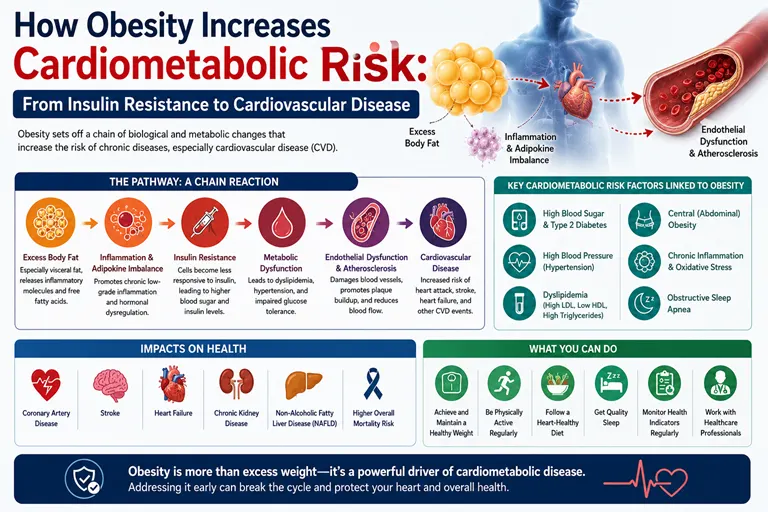
This is why obesity has become one of the most important topics in modern endocrinology, obesity medicine, and diabetes care. Clinicians are no longer looking at weight alone. They are increasingly evaluating how obesity affects the entire cardiometabolic system, including blood glucose, insulin action, blood pressure, triglycerides, HDL cholesterol, liver health, inflammatory burden, and long-term vascular outcomes.
In this article, we explore how obesity increases cardiometabolic risk, beginning with insulin resistance and progressing through inflammation, dyslipidemia, hypertension, and cardiovascular disease. We also discuss why this topic is so important for clinicians, researchers, and specialty journals working in obesity, endocrinology, and diabetes.
Table of Contents
- What is cardiometabolic risk?
- Why obesity is more than excess body weight
- The role of visceral fat in metabolic disease
- How obesity drives insulin resistance
- Chronic inflammation and metabolic dysfunction in obesity
- Obesity, dyslipidemia, and abnormal lipid metabolism
- The link between obesity and hypertension
- Endothelial dysfunction, atherosclerosis, and cardiovascular disease
- Obesity, diabesity, and the broader metabolic syndrome picture
- Why cardiometabolic risk changes obesity treatment strategy
- Why this topic matters for endocrinology and diabetes research
- Frequently asked questions
- Conclusion
1. What Is Cardiometabolic Risk?
Cardiometabolic risk refers to the combined likelihood of developing cardiovascular disease and metabolic disorders due to a cluster of interconnected risk factors. These factors often include:
● obesity, especially abdominal or visceral obesity
● insulin resistance
● elevated blood glucose or type 2 diabetes
● hypertension
● high triglycerides
● low HDL cholesterol
● chronic inflammation
● fatty liver disease and related metabolic dysfunction
The concept is important because these abnormalities rarely occur in isolation. Instead, they tend to cluster together and reinforce one another. A person with obesity may initially present with only mild weight gain and borderline glucose elevation, but over time they may also develop worsening insulin resistance, rising blood pressure, lipid abnormalities, and progressive vascular risk.
Why cardiometabolic risk matters clinically
Cardiometabolic risk is important because it predicts the likelihood of serious long-term outcomes such as:
● type 2 diabetes
● coronary artery disease
● stroke
● heart failure
● chronic kidney disease
● fatty liver progression
● diabetes complications related to vascular injury
Understanding cardiometabolic risk helps clinicians move beyond a narrow focus on weight alone and assess the broader disease burden associated with obesity.
2. Why Obesity Is More Than Excess Body Weight
For many years, obesity was often described in overly simplistic terms as a matter of excess calorie intake and body size. Modern endocrinology and obesity medicine now recognize that obesity is far more complex. It is a chronic metabolic disease influenced by genetics, appetite regulation, endocrine signaling, adipose tissue biology, insulin sensitivity, lifestyle patterns, environmental exposure, and neurohormonal pathways.
Why body weight alone does not tell the full story
Two individuals with similar body weight may have very different metabolic risk profiles depending on:
● fat distribution
● muscle mass
● insulin sensitivity
● liver fat accumulation
● inflammatory burden
● physical activity levels
● genetic and hormonal factors
This is one reason clinicians increasingly pay attention not only to body mass index but also to waist circumference, visceral adiposity, metabolic markers, blood pressure, and glycemic status.
Why obesity is metabolically active
Adipose tissue is not a passive storage compartment. It is metabolically active and capable of influencing:
● inflammatory pathways
● insulin action
● lipid metabolism
● endocrine signaling
● appetite regulation
● vascular health
When adipose tissue expands in an unhealthy pattern, especially in the abdominal and visceral region, it can contribute directly to cardiometabolic disease progression.
3. The Role of Visceral Fat in Metabolic Disease
One of the most important reasons obesity increases cardiometabolic risk is the presence of visceral fat. Visceral fat refers to adipose tissue stored deep within the abdominal cavity around internal organs. It is different from subcutaneous fat and is much more strongly associated with metabolic dysfunction.
Why visceral fat matters
Visceral adiposity is linked to:
● insulin resistance
● increased free fatty acid release
● inflammatory cytokine activity
● abnormal glucose metabolism
● fatty liver disease
● dyslipidemia
● elevated cardiovascular risk
A patient with high visceral fat burden may therefore be at significant cardiometabolic risk even before overt diabetes or cardiovascular disease is diagnosed.
Why fat distribution matters more than weight alone
This is why two people with the same BMI may not carry the same risk. A person with greater abdominal and visceral adiposity is more likely to experience:
● impaired glucose tolerance
● high triglycerides
● hypertension
● liver fat accumulation
● systemic inflammation
● vascular stress
Visceral fat is therefore one of the key biological bridges connecting obesity with cardiometabolic disease.
4. How Obesity Drives Insulin Resistance
Insulin resistance is one of the central mechanisms through which obesity increases cardiometabolic risk.
What is insulin resistance?
Insulin resistance occurs when tissues such as muscle, liver, and adipose tissue do not respond effectively to insulin. As a result, the body requires higher insulin levels to maintain normal glucose control. Over time, this may lead to hyperinsulinemia, impaired glucose tolerance, and eventually type 2 diabetes if pancreatic compensation becomes inadequate.
How obesity contributes to insulin resistance
Excess adiposity, especially visceral fat, contributes to insulin resistance through several mechanisms:
● increased free fatty acid flux
● chronic inflammatory signaling
● altered adipokine secretion
● ectopic fat deposition in liver and muscle
● impaired metabolic flexibility
● endocrine and cellular stress affecting insulin-responsive tissues
Why insulin resistance increases cardiometabolic risk
Insulin resistance is not just a precursor to diabetes. It is also linked with:
● hypertension
● dyslipidemia
● endothelial dysfunction
● increased inflammatory burden
● fatty liver disease
● progression toward metabolic syndrome
This is why insulin resistance sits at the center of the obesity-cardiometabolic disease relationship.
5. Chronic Inflammation and Metabolic Dysfunction in Obesity
Obesity is increasingly recognized as a state of chronic low-grade inflammation. This inflammatory burden is not always dramatic or obvious in the way an acute infection is, but it plays an important long-term role in metabolic dysfunction and vascular risk.
How inflammation develops in obesity
As adipose tissue expands, especially visceral fat, it can alter the production of inflammatory mediators and disrupt normal endocrine signaling. This contributes to a metabolic environment associated with:
● impaired insulin action
● vascular stress
● worsening glucose metabolism
● progressive lipid abnormalities
● tissue dysfunction across multiple organs
Why inflammation matters in cardiometabolic disease
Chronic inflammation contributes to:
● insulin resistance
● endothelial dysfunction
● atherosclerotic progression
● worsening metabolic syndrome
● increased risk of cardiovascular disease
This inflammatory state helps explain why obesity is not simply a mechanical burden on the body. It is a biologically active condition that can drive long-term disease processes at the metabolic and vascular level.
6. Obesity, Dyslipidemia, and Abnormal Lipid Metabolism
Another major way obesity increases cardiometabolic risk is through its impact on lipid metabolism. Patients with obesity frequently develop dyslipidemia, which is a key component of cardiometabolic disease.
Common lipid abnormalities associated with obesity include:
● elevated triglycerides
● low HDL cholesterol
● abnormal LDL particle profile in some patients
● increased hepatic fat accumulation contributing to metabolic dysfunction
Why dyslipidemia matters
Abnormal lipid patterns contribute to:
● atherosclerotic cardiovascular disease
● endothelial injury
● worsening insulin resistance
● increased long-term vascular burden
Why obesity worsens lipid handling
Obesity, especially when associated with insulin resistance, can disrupt how the body processes and stores fats. This contributes to a more atherogenic metabolic environment and raises the risk of future cardiovascular events.
For clinicians, lipid abnormalities in a patient with obesity should not be viewed as an isolated lab issue. They are part of the broader cardiometabolic picture.
7. The Link Between Obesity and Hypertension
Hypertension is another common and clinically important component of obesity-related cardiometabolic risk.
Why obesity and high blood pressure often occur together
Obesity can contribute to elevated blood pressure through multiple interacting pathways, including:
● insulin resistance and hyperinsulinemia
● inflammatory and endothelial changes
● altered renal sodium handling
● increased sympathetic activity
● vascular stiffness and impaired vascular regulation
● sleep apnea and related physiologic stress in some patients
Why hypertension matters in the obesity context
When hypertension coexists with obesity, insulin resistance, and dyslipidemia, the patient’s cardiovascular risk rises substantially. The combination increases the likelihood of:
● coronary artery disease
● stroke
● chronic kidney disease
● heart failure
● accelerated vascular damage
This is why blood pressure assessment is an essential part of obesity management, not an optional add-on.
8. Endothelial Dysfunction, Atherosclerosis, and Cardiovascular Disease
The final common pathway of obesity-related cardiometabolic risk often involves vascular injury and cardiovascular disease.
What is endothelial dysfunction?
The endothelium is the inner lining of blood vessels. It plays an essential role in vascular tone, inflammation control, clotting balance, and overall vessel health. In obesity, a combination of insulin resistance, inflammation, dyslipidemia, oxidative stress, and hypertension can impair endothelial function.
Why this matters
Endothelial dysfunction contributes to:
● reduced vascular flexibility
● abnormal vessel signaling
● atherosclerotic progression
● increased cardiovascular risk
How obesity contributes to cardiovascular disease
Through the combined effects of:
● insulin resistance
● inflammation
● hypertension
● dyslipidemia
● endothelial injury
● fatty liver and systemic metabolic dysfunction
obesity can significantly increase the risk of:
● coronary artery disease
● myocardial infarction
● stroke
● heart failure
● long-term vascular complications in patients with diabetes
This is why obesity should be treated as a major cardiovascular risk factor, not merely a weight problem.
9. Obesity, Diabesity, and the Broader Metabolic Syndrome Picture
The cardiometabolic consequences of obesity become even more important when obesity coexists with type 2 diabetes, creating the clinical picture often described as diabesity.
Why diabesity amplifies cardiometabolic risk
When obesity and type 2 diabetes occur together, the patient may experience:
● more severe insulin resistance
● worse glycemic burden
● greater inflammatory stress
● higher rates of hypertension and dyslipidemia
● increased microvascular and macrovascular risk
How metabolic syndrome fits in
Many patients with obesity and cardiometabolic risk also meet features of metabolic syndrome, including:
● abdominal obesity
● elevated glucose
● high blood pressure
● high triglycerides
● low HDL cholesterol
This overlap reinforces the idea that obesity should be managed within a broader cardiometabolic framework, not as an isolated issue.
10. Why Cardiometabolic Risk Changes Obesity Treatment Strategy
Recognizing obesity as a cardiometabolic disease changes how clinicians think about treatment.
Why treatment cannot focus on weight alone
If a patient loses a small amount of weight but continues to have:
● severe insulin resistance
● uncontrolled diabetes
● high blood pressure
● dyslipidemia
● fatty liver progression
● inflammatory burden
then the broader disease process may remain inadequately controlled.
A cardiometabolic obesity treatment strategy may include:
● structured lifestyle intervention
● weight management support
● blood pressure control
● lipid management
● glycemic optimization
● therapies that consider both obesity and diabetes burden
● long-term monitoring of cardiovascular risk factors
Why this matters in endocrinology
Modern obesity and diabetes care increasingly focuses on metabolic health improvement, not only kilograms lost. This is especially important in patients with obesity-related diabetes, fatty liver disease, or cardiovascular risk clustering.
11. Why This Topic Matters for Endocrinology and Diabetes Research
The relationship between obesity and cardiometabolic risk is one of the most important research areas in endocrinology and diabetes care because it affects prevention, therapeutics, risk prediction, and long-term disease management.
Key research questions include:
● How can cardiometabolic risk be identified earlier in obesity?
● Which patients with obesity are most likely to progress to diabetes or cardiovascular disease?
● How should visceral adiposity be integrated into risk assessment?
● Which pharmacologic and lifestyle strategies best reduce cardiometabolic burden?
● How can obesity treatment improve long-term vascular outcomes?
Why journals should publish on this topic
A journal like Advances in Obesity, Endocrinology, and Diabetes (AOEDS) is well positioned to publish:
● review articles on obesity and cardiometabolic disease
● original research on insulin resistance, dyslipidemia, and hypertension
● diabesity-focused clinical discussions
● obesity pharmacotherapy and metabolic outcome studies
● endocrine perspectives on cardiovascular risk reduction
Because obesity, diabetes, and cardiovascular risk are so tightly linked, cardiometabolic disease should remain a central publishing theme in obesity and endocrinology journals.
12. Frequently Asked Questions
1. What does cardiometabolic risk mean?
Cardiometabolic risk refers to the combined risk of metabolic disease and cardiovascular disease arising from factors such as obesity, insulin resistance, hypertension, dyslipidemia, and abnormal glucose metabolism.
2. Why does obesity increase cardiometabolic risk?
Obesity, especially visceral obesity, promotes insulin resistance, inflammation, abnormal lipid metabolism, high blood pressure, and vascular dysfunction, all of which increase long-term cardiovascular and metabolic disease risk.
3. Is obesity a risk factor for heart disease even without diabetes?
Yes. Obesity can increase cardiovascular risk even before diabetes develops because it affects blood pressure, lipid metabolism, inflammation, and endothelial function.
4. Why is visceral fat more dangerous than simple weight gain?
Visceral fat is metabolically active and strongly associated with insulin resistance, inflammation, fatty liver disease, dyslipidemia, and cardiovascular risk.
5. How is obesity linked with metabolic syndrome?
Obesity, especially abdominal obesity, is one of the key components of metabolic syndrome and is commonly associated with elevated glucose, hypertension, high triglycerides, and low HDL cholesterol.
6. Why is cardiometabolic risk important in obesity treatment?
Because obesity management should aim not only to reduce body weight but also to lower the patient’s broader risk of diabetes, cardiovascular disease, and long-term metabolic complications.
13. Conclusion
Obesity is far more than a disorder of excess body weight. It is a chronic, biologically active cardiometabolic disease that can disrupt insulin sensitivity, lipid metabolism, inflammatory signaling, vascular health, and endocrine balance. These disturbances often begin long before a formal diagnosis of cardiovascular disease is made, but over time they create a high-risk environment for type 2 diabetes, hypertension, dyslipidemia, fatty liver disease, endothelial dysfunction, and atherosclerotic cardiovascular disease.
The concept of cardiometabolic risk helps clinicians and researchers understand why obesity should never be approached as a superficial or isolated issue. Visceral adiposity, insulin resistance, chronic inflammation, abnormal lipid handling, and blood pressure dysregulation all interact to increase long-term vascular and metabolic burden. When obesity coexists with type 2 diabetes, as in diabesity, this risk often becomes even more pronounced.
For clinicians, this means obesity treatment should focus not only on weight reduction but also on glycemic control, blood pressure management, lipid improvement, cardiovascular risk reduction, and long-term metabolic health. For researchers, it highlights the need for continued work on obesity mechanisms, metabolic syndrome, cardiovascular prevention, and integrated treatment strategies. For journals like AOEDS, cardiometabolic risk is one of the most important bridges connecting obesity, endocrinology, and diabetes into a unified field of clinical and scientific inquiry.
Publish Obesity, Diabetes, and Cardiometabolic Research with AOEDS
https://aoeds.com/submit-paper
If your work focuses on obesity and cardiovascular risk, insulin resistance, diabesity, metabolic syndrome, hypertension in obesity, dyslipidemia, or obesity-related endocrine and metabolic disease, consider submitting your manuscript to Advances in Obesity, Endocrinology, and Diabetes (AOEDS). Specialty journals play an important role in bringing clinically relevant cardiometabolic research to endocrinologists, diabetologists, obesity specialists, and researchers working to reduce the long-term burden of metabolic disease.