


GLP-1 Receptor Agonists in Obesity Management: Current Evidence and Future Trends
GLP-1 Receptor Agonists in Obesity Management: Current Evidence and Future Trends
Introduction
Obesity has become one of the most important clinical and public health challenges of the 21st century. It is no longer viewed as a simple consequence of overeating or inactivity. Instead, obesity is now recognized as a chronic, multifactorial, relapsing metabolic disease influenced by genetics, neuroendocrine pathways, appetite regulation, adipose tissue biology, insulin resistance, environment, lifestyle, and long-term energy balance. Its consequences extend far beyond body weight alone and include type 2 diabetes, hypertension, dyslipidemia, cardiovascular disease, fatty liver disease, sleep apnea, musculoskeletal burden, reproductive and endocrine disturbances, and reduced quality of life.
Because of this complexity, obesity management has moved well beyond traditional advice focused only on diet and exercise. Lifestyle intervention remains essential, but many patients with obesity require a broader strategy that also addresses appetite regulation, satiety, glycemic burden, insulin resistance, and long-term metabolic risk. This is one reason why GLP-1 receptor agonists have become a major topic in obesity medicine, endocrinology, and diabetes care.
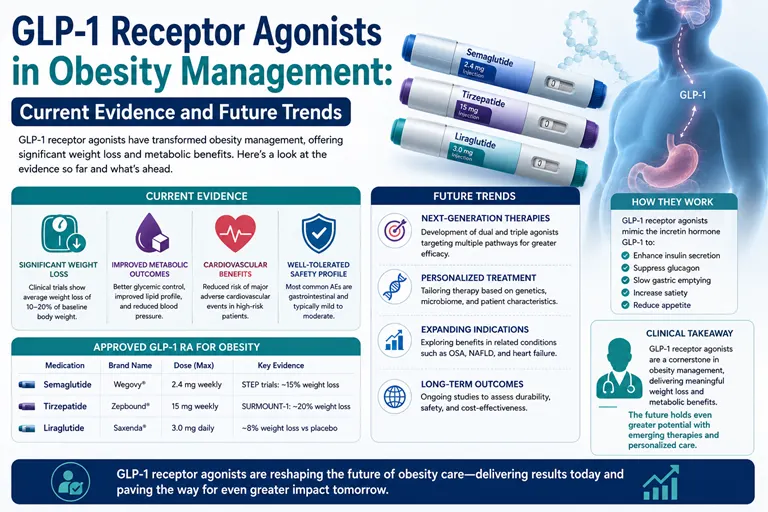
GLP-1 receptor agonists were initially developed and discussed mainly in the context of type 2 diabetes management, but they have increasingly gained attention for their role in weight reduction and obesity treatment. Their importance lies in the fact that they target biological pathways involved in satiety, food intake, gastric emptying, and glucose regulation, making them highly relevant in patients whose obesity is closely linked with metabolic dysfunction and diabetes risk.
In recent years, GLP-1 receptor agonists have shifted from being seen primarily as diabetes medications to becoming central players in the wider conversation around obesity pharmacotherapy, diabesity, cardiometabolic risk reduction, and endocrine weight management. For clinicians, they represent a major therapeutic development. For researchers, they open important questions around comparative effectiveness, long-term outcomes, safety, patient selection, treatment adherence, and the future of combined obesity-diabetes care.
This article explores GLP-1 receptor agonists in obesity management, including how they work, why they matter, what benefits they may offer, the clinical issues that need careful consideration, and why they are shaping the future of obesity and endocrinology research.
Table of Contents
- Why obesity management has changed in modern endocrinology
- What are GLP-1 receptor agonists?
- How GLP-1 receptor agonists support weight loss
- GLP-1 receptor agonists and obesity-related metabolic health
- Why GLP-1 therapies matter in diabesity
- Clinical benefits beyond weight reduction
- Patient selection and practical clinical considerations
- Adverse effects, precautions, and treatment limitations
- GLP-1 receptor agonists vs older obesity management approaches
- Future trends in obesity pharmacotherapy
- Why GLP-1 therapies are important for obesity and diabetes journals
- Frequently asked questions
- Conclusion
1. Why Obesity Management Has Changed in Modern Endocrinology
For many years, obesity treatment in routine practice was often framed in overly simplistic terms. Patients were told to eat less, move more, and try harder. While lifestyle modification remains fundamental, this older model failed to account for the biological complexity of obesity and the difficulty of sustaining long-term weight reduction in a disease shaped by hormonal regulation, appetite signaling, neurobiology, insulin resistance, environmental exposure, and metabolic adaptation.
Modern endocrinology increasingly treats obesity as a chronic metabolic disease rather than a failure of willpower. This shift matters because it changes the clinical question. Instead of asking only, “How can the patient lose weight?” clinicians now ask:
● What is driving appetite dysregulation?
● How severe is insulin resistance?
● Is obesity contributing to diabetes, hypertension, fatty liver disease, or reproductive dysfunction?
● Does the patient need pharmacologic support in addition to lifestyle intervention?
● How can weight management be approached in a way that is sustainable and metabolically meaningful?
Why this shift matters
Obesity is strongly associated with:
● type 2 diabetes
● metabolic syndrome
● hypertension
● dyslipidemia
● fatty liver disease
● sleep-disordered breathing
● cardiovascular disease
● reduced mobility and chronic inflammation
Because of this, the goal of obesity treatment is not merely to reduce body weight on a scale. It is to improve overall metabolic health, long-term disease burden, and quality of life. GLP-1 receptor agonists have become important in this context because they support a more biologically informed approach to obesity care.
2. What Are GLP-1 Receptor Agonists?
GLP-1 receptor agonists are a class of medications that mimic or enhance the activity of glucagon-like peptide-1 (GLP-1), a hormone involved in glucose regulation, satiety, and gastrointestinal signaling. These agents were initially developed in the context of type 2 diabetes management, but their role in obesity treatment has expanded rapidly because of their effects on appetite control, food intake, and body weight.
Why GLP-1 matters biologically
GLP-1 is part of the body’s metabolic signaling system and is associated with:
● glucose-dependent insulin activity
● appetite and satiety signaling
● regulation of food intake
● delayed gastric emptying in clinically relevant contexts
● interaction with broader metabolic pathways involved in obesity and diabetes
When clinicians discuss GLP-1 receptor agonists in obesity care, they are not just discussing a drug category. They are discussing a treatment approach that attempts to work with some of the biological systems involved in hunger regulation, metabolic control, and obesity-related diabetes risk.
Why this class gained attention in obesity medicine
GLP-1 receptor agonists became especially important because many patients with obesity also have:
● prediabetes or type 2 diabetes
● insulin resistance
● excessive appetite burden
● difficulty sustaining calorie restriction alone
● progressive weight gain despite repeated lifestyle attempts
● obesity-linked cardiometabolic risk
In this setting, a therapy that influences satiety, glucose handling, and metabolic regulation naturally becomes highly relevant.
3. How GLP-1 Receptor Agonists Support Weight Loss
The role of GLP-1 receptor agonists in obesity management is closely tied to how they influence appetite, satiety, eating behavior, and metabolic control. Although individual patient response varies, this class has become important because it helps address some of the biological barriers that make long-term weight loss so difficult.
Why weight loss is difficult in obesity
Obesity is not simply a passive storage problem. It involves active physiologic mechanisms that defend body weight, including:
● hunger signaling
● satiety dysregulation
● metabolic adaptation after weight loss
● environmental food exposure
● stress, sleep disruption, and reward pathways
● insulin resistance and metabolic inflexibility
As a result, many patients can lose some weight initially through lifestyle efforts but struggle to maintain it over time.
How GLP-1 receptor agonists help
GLP-1 receptor agonists are clinically important in obesity management because they may support:
● reduced appetite
● earlier satiety
● lower overall caloric intake
● improved control over eating patterns in some patients
● metabolic support in individuals with obesity-linked diabetes risk or existing type 2 diabetes
Why this is clinically meaningful
Even moderate weight reduction can improve:
● insulin sensitivity
● blood glucose control
● blood pressure
● fatty liver burden
● sleep apnea severity
● mobility and quality of life
● cardiometabolic risk profile
This is why therapies that help patients achieve meaningful and sustained weight reduction are increasingly important in obesity care.
4. GLP-1 Receptor Agonists and Obesity-Related Metabolic Health
The value of GLP-1 receptor agonists goes beyond weight loss alone. Obesity is deeply tied to metabolic dysfunction, and the clinical relevance of any obesity therapy increases when it can influence broader metabolic risk.
Obesity-related metabolic problems often include:
● insulin resistance
● elevated fasting glucose or HbA1c
● hypertension
● dyslipidemia
● fatty liver disease
● chronic inflammatory burden
● increased cardiovascular risk
Why metabolic impact matters
A patient with obesity is often not seeking weight reduction only for cosmetic reasons. The clinical objective may be to improve:
● glycemic burden
● progression toward type 2 diabetes
● metabolic syndrome severity
● cardiometabolic risk markers
● long-term endocrine and internal medicine outcomes
GLP-1 receptor agonists are important because they sit at the intersection of obesity treatment and metabolic management. This is one of the main reasons they have become so prominent in endocrinology and obesity medicine.
5. Why GLP-1 Therapies Matter in Diabesity
The concept of diabesity highlights the close relationship between obesity and type 2 diabetes, especially when both conditions are linked by insulin resistance, metabolic dysfunction, and shared cardiometabolic risk. GLP-1 receptor agonists are particularly relevant in this context because they speak to both sides of the problem.
Why diabesity changes treatment thinking
In a patient with obesity and type 2 diabetes, the treatment challenge is rarely limited to blood sugar alone. The clinician may also be dealing with:
● central obesity
● appetite dysregulation
● insulin resistance
● hypertension
● dyslipidemia
● fatty liver disease
● escalating medication burden
Why GLP-1 receptor agonists fit the diabesity model
These therapies are important because they may help address:
● glycemic control in appropriate patients
● appetite-related barriers to weight reduction
● obesity-linked metabolic burden
● long-term cardiometabolic disease risk in a broader treatment framework
This is why GLP-1 receptor agonists have become central not only in diabetes care but also in the larger discussion of combined obesity-diabetes management.
6. Clinical Benefits Beyond Weight Reduction
A major reason GLP-1 receptor agonists have changed obesity treatment conversations is that their relevance is not limited to body weight alone. Clinicians increasingly view obesity as a disease that affects the entire cardiometabolic system, so therapies are being evaluated not only for how much weight they reduce but also for how they influence the patient’s broader metabolic health.
Areas of clinical interest beyond weight alone include:
● glycemic control in patients with obesity-linked diabetes or prediabetes
● insulin resistance burden
● appetite regulation and satiety support
● cardiometabolic risk profile
● quality of life and physical functioning
● treatment adherence and long-term metabolic strategy
Why this matters in endocrine practice
Patients with obesity often also have:
● type 2 diabetes or prediabetes
● hypertension
● dyslipidemia
● polycystic ovary syndrome in some cases
● fatty liver disease
● chronic fatigue or mobility limitations
When an obesity therapy interacts with the broader metabolic picture, it becomes much more clinically valuable. This is one reason GLP-1 receptor agonists are now central to many obesity medicine and endocrine discussions.
7. Patient Selection and Practical Clinical Considerations
Although GLP-1 receptor agonists have transformed obesity care, they are not simply “weight-loss injections” to be used casually or without clinical context. Appropriate patient selection, education, follow-up, and realistic goal-setting remain essential.
Questions clinicians may consider before using GLP-1 receptor agonists
● Does the patient have obesity-related metabolic complications?
● Is there prediabetes, type 2 diabetes, or strong insulin resistance?
● Has lifestyle intervention alone been insufficient despite meaningful effort?
● What are the patient’s long-term weight and metabolic goals?
● Are there gastrointestinal, endocrine, or medication-related factors that need careful review?
● Can the patient adhere to follow-up and dose escalation guidance?
● What are the access and affordability considerations?
Why counseling matters
Patients need to understand that obesity treatment is not only about taking a drug. It still involves:
● long-term behavior support
● realistic expectations around pace of weight loss
● nutritional planning
● monitoring of side effects
● ongoing review of metabolic outcomes
● treatment continuity and adherence planning
A successful obesity treatment plan is rarely just about prescribing a medication. It is about integrating pharmacology into a sustainable metabolic care strategy.
8. Adverse Effects, Precautions, and Treatment Limitations
As with any therapy, GLP-1 receptor agonists must be approached with a balanced view of benefits, side effects, precautions, and real-world limitations. This is especially important because enthusiasm around obesity pharmacotherapy can sometimes overshadow the need for careful clinical judgment.
Why a balanced view is necessary
Patients being considered for obesity pharmacotherapy may have:
● multiple chronic conditions
● long-term diabetes
● gastrointestinal sensitivity
● polypharmacy
● adherence challenges
● financial constraints
● unrealistic expectations about the role of medication
Important clinical considerations
When discussing GLP-1 receptor agonists, clinicians often need to think about:
● gastrointestinal tolerability
● dose escalation and patient education
● treatment persistence and follow-up
● compatibility with broader diabetes and obesity management plans
● access and affordability barriers
● how to handle weight regain risk if therapy is interrupted
Why journals should cover these issues
It is important for obesity and endocrinology journals to publish not only positive therapeutic narratives but also balanced discussion around:
● patient selection
● safety and tolerability
● real-world barriers to long-term use
● comparative effectiveness
● adherence and discontinuation issues
● evidence gaps in special populations
This makes the literature more useful for actual clinical practice.
9. GLP-1 Receptor Agonists vs Older Obesity Management Approaches
The rise of GLP-1 receptor agonists has changed obesity treatment partly because it represents a move away from narrow, short-term, or overly simplistic weight-loss approaches.
Traditional obesity management often relied heavily on:
● generic calorie restriction advice
● exercise recommendations without sufficient long-term support
● older pharmacologic approaches with limited metabolic impact
● fragmented care where obesity and diabetes were treated separately
● repeated short-term weight loss attempts without durable planning
What has changed
Modern obesity medicine increasingly recognizes that:
● obesity is biologically defended by the body
● appetite regulation matters
● weight loss maintenance is often harder than initial loss
● metabolic disease and obesity must often be treated together
● patients benefit from therapies that address more than willpower alone
GLP-1 receptor agonists fit into this newer model because they help bridge the gap between lifestyle intervention, obesity pharmacotherapy, and metabolic disease management.
10. Future Trends in Obesity Pharmacotherapy
GLP-1 receptor agonists are already central to obesity treatment, but they also represent a larger shift in the future of metabolic medicine. The field is moving toward therapies that treat obesity not as a superficial body-size issue, but as a complex endocrine and metabolic disorder.
Future trends likely to shape obesity pharmacotherapy include:
● more individualized obesity treatment pathways
● greater focus on combined obesity-diabetes management
● therapies targeting multiple metabolic pathways
● stronger emphasis on long-term cardiometabolic outcomes
● comparative effectiveness research across obesity medications
● more real-world data on adherence, relapse, and patient experience
● broader integration of obesity medicine into endocrinology and internal medicine practice
Why this matters for researchers
The growth of GLP-1-based therapies creates a wide research agenda involving:
● long-term outcome studies
● cardiometabolic risk reduction analysis
● obesity treatment sequencing
● special population studies
● real-world endocrine practice patterns
● comparative research with newer dual-pathway or combination therapies
For obesity journals, this is a major area of sustained scholarly interest.
11. Why GLP-1 Therapies Are Important for Obesity and Diabetes Journals
A journal covering obesity, endocrinology, and diabetes cannot ignore GLP-1 receptor agonists because they sit at the center of several major contemporary themes in metabolic medicine.
GLP-1 therapies are relevant to journals because they connect:
● obesity treatment
● diabetes management
● endocrine pharmacotherapy
● insulin resistance and diabesity
● cardiometabolic risk reduction
● long-term metabolic disease strategy
Important journal topics related to GLP-1 therapies include:
● review articles on obesity pharmacotherapy
● clinical discussions on diabesity treatment
● real-world weight-loss outcome studies
● comparative therapy analyses
● adherence and tolerability research
● endocrinology perspectives on obesity-related metabolic care
● editorials on the future of obesity medicine
For AOEDS, GLP-1 receptor agonists are not just a trendy topic. They are a foundational subject that fits directly within the journal’s scope across obesity, diabetes, and endocrinology.
12. Frequently Asked Questions
1. What are GLP-1 receptor agonists used for?
GLP-1 receptor agonists are used in metabolic medicine and are discussed in relation to type 2 diabetes management and obesity treatment, especially where appetite regulation and metabolic control are important.
2. Why are GLP-1 receptor agonists important in obesity care?
They are important because they target biological pathways involved in satiety, food intake, and metabolic regulation, making them relevant in patients with obesity and obesity-linked metabolic disease.
3. Are GLP-1 receptor agonists only for people with diabetes?
No. While they were strongly associated with diabetes care initially, GLP-1 receptor agonists are now also important in the broader field of obesity management, depending on clinical indication and treatment planning.
4. Why do obesity journals publish so much about GLP-1 therapies?
Because GLP-1 receptor agonists have become central to obesity pharmacotherapy, diabesity care, metabolic disease treatment, and modern endocrine weight management.
5. Do GLP-1 receptor agonists replace lifestyle intervention?
No. Lifestyle intervention remains a core part of obesity management. Pharmacologic treatment should be viewed as part of a broader long-term care strategy rather than a substitute for all other interventions.
6. Why are GLP-1 receptor agonists relevant to AOEDS?
Because AOEDS focuses on obesity, endocrinology, and diabetes, and GLP-1 therapies directly intersect with all three areas.
13. Conclusion
The growing importance of GLP-1 receptor agonists in obesity management reflects a major shift in how obesity is understood and treated in modern medicine. Obesity is no longer approached simply as excess body weight or a lifestyle failure. It is increasingly recognized as a chronic metabolic disease influenced by appetite regulation, endocrine signaling, insulin resistance, inflammation, and long-term cardiometabolic risk. In this setting, therapies that target biologically meaningful pathways have become essential to the conversation.
GLP-1 receptor agonists are important because they connect several major goals of contemporary metabolic care: weight reduction, appetite regulation, obesity-related diabetes management, and broader metabolic health improvement. Their significance lies not only in the possibility of supporting weight loss but also in the way they fit into the larger treatment framework of diabesity, insulin resistance, and cardiometabolic disease prevention.
For clinicians, GLP-1 receptor agonists represent an increasingly important option in patients whose obesity cannot be managed effectively through lifestyle measures alone or whose metabolic burden extends into prediabetes, type 2 diabetes, hypertension, or related endocrine complications. For researchers, they offer a rich field of inquiry involving long-term outcomes, patient selection, comparative effectiveness, adherence, safety, and the future of obesity pharmacotherapy. For specialty journals such as AOEDS, they are a high-value topic that sits naturally at the intersection of obesity, endocrinology, and diabetes.
As obesity medicine continues to evolve, GLP-1 receptor agonists will remain central to discussions about how to treat metabolic disease more effectively, more biologically, and more sustainably. Publishing clear, balanced, and evidence-informed discussions on these therapies is therefore an important part of advancing endocrine and obesity scholarship.
Publish Obesity, Diabetes, and Endocrinology Research with AOEDS
https://aoeds.com/submit-paper
If your work focuses on GLP-1 receptor agonists, obesity pharmacotherapy, diabesity, insulin resistance, type 2 diabetes, endocrinology, or metabolic disease management, consider submitting your manuscript to Advances in Obesity, Endocrinology, and Diabetes (AOEDS). Specialty journals play an important role in connecting emerging therapeutic research with the clinicians, scholars, and institutions working in real-world obesity and endocrine care.